
The National Investigation Agency (NIA) has arrested Maulana Imran Ali and Rinku SK in connection with the April violence and protests in Malda, West Bengal. The arrests are part of 12 ongoing cases related to road blockades, illegal detention of judicial officers, and attacks on police during the Special Intensive Revision of electoral rolls.

The TMC has accused the BJP of instigating unrest in Malda, West Bengal, and criticised Prime Minister Modi for allegedly spreading misinformation regarding women's safety in the state. The BJP denies the allegations, asserting that the TMC is responsible for lawlessness.
Prime Minister Narendra Modi has criticised the Trinamool Congress (TMC) government in West Bengal, citing the Malda incident as evidence of lawlessness and accusing the party of 'maha jungleraj'. He framed the upcoming elections as a battle between the TMC's 'fear' and the BJP's 'trust', addressing issues such as infiltration, corruption, and demographic change.
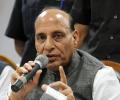
A member of the delegation said the home ministry is likely to send a team to the area.
Prime Minister Narendra Modi has accused the TMC government in West Bengal of 'maha jungleraj' following an incident in Malda where judicial officers were allegedly held hostage. He framed the upcoming elections as a battle between the TMC's 'fear' and the BJP's 'trust', promising accountability for alleged atrocities and a focus on development.

The Supreme Court has permitted the NIA to file its charge sheet upon completion of the investigation into the incident in West Bengal where judicial officers were illegally confined by a mob.

The first phase of the West Bengal assembly elections was disrupted by EVM glitches and overnight violence in several districts. Polling was halted or delayed at multiple booths due to malfunctioning Electronic Voting Machines. Incidents of violence were reported in Murshidabad and Cooch Behar, with political parties trading accusations.

Several incidents of post-poll violence have been reported across West Bengal, with tension escalating in various districts following the recent assembly elections. Clashes between political party supporters have led to injuries, arrests, and heightened security measures.

West Bengal Chief Minister Mamata Banerjee has criticised the Election Commission for allegedly failing to protect judicial officers involved in electoral roll revisions in Malda district. She accused the EC of lacking control over law and order and enabling the BJP's alleged attempts to disrupt the election process.

A Trinamool Congress (TMC) worker was shot dead and two others, including a local committee president, were critically injured in a gun attack in Malda district, West Bengal, on Tuesday. The incident occurred in the Kaliaganj area when TMC workers were attending a program. Police suspect factionalism within the party could be behind the attack, while senior TMC leaders blame external forces. The killing comes less than a fortnight after the murder of another TMC councillor in the same district, adding to the tension in the area ahead of the upcoming panchayat elections.

The high-pitched campaign for the first phase of West Bengal assembly elections concluded with the BJP and TMC focusing on electoral rolls and dietary habits, while making promises to voters. Voting is scheduled in 152 constituencies across north Bengal and southern districts, with over 3.60 crore electors eligible to vote. A record number of Central paramilitary forces have been deployed, and several districts have been identified as highly sensitive.

TMC leader Abhishek Banerjee has accused the Congress party of indirectly supporting the BJP in West Bengal, urging voters to reject them in the upcoming elections. He alleged a nexus between the Congress, BJP, and Left parties, claiming that votes for Congress would split the opposition and benefit the BJP.

Congress leader Rahul Gandhi criticised the BJP and RSS for undermining the Constitution and accused the TMC of failing to deliver on job creation promises during rallies in West Bengal.

'This is a major rupture in Tamil Nadu's political order.' 'For the Dravidian parties, the message is clear: The old DMK-AIADMK binary is no longer guaranteed a future.'

Voting has commenced for the assembly elections in Tamil Nadu and West Bengal, with over 3.60 crore electors eligible to vote in 152 constituencies in Bengal and 5.73 crore voters in Tamil Nadu. Security measures are heightened to ensure free and fair polling.
Congress leader Rahul Gandhi criticised the BJP and RSS for undermining the Constitution and accused the TMC of failing to provide jobs in West Bengal during recent rallies.

Union Home Minister Amit Shah addressed poll rallies in West Bengal, promising to resolve the Gorkha issue constitutionally and offering a development package for north Bengal if the BJP is voted to power.

Voting has commenced in 142 constituencies for the second and final phase of the West Bengal assembly elections, with significant security measures in place. The outcome will determine whether the TMC maintains its dominance or if the BJP can gain ground in the state.
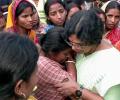
A delegation from the National Commission for Women (NCW) visited a relief camp in Malda, West Bengal, and reported that women were being harassed and threatened by police. The NCW team, led by chairperson Vijaya Rahatkar, met with those displaced by riots in Murshidabad and alleged that the women were being coerced to return home without proper safety measures. The team is scheduled to travel to Murshidabad and Kolkata to continue their investigation.

Bihar MP Rajesh Ranjan, also known as Pappu Yadav, has faced criticism for his controversial remarks regarding women's reservation in Parliament, with his comments sparking outrage and prompting a notice from the Bihar Women's Commission.

In a significant move before the West Bengal assembly elections, the Election Commission has ordered a major reshuffle of the state's police force, transferring 19 senior officers to ensure fair and secure elections.

The BJP will focus on Prime Minister Narendra Modi's development agenda in the upcoming West Bengal assembly elections, rather than projecting a chief ministerial candidate, according to state BJP president Samik Bhattacharya.

Union Home Minister Amit Shah launched the BJP's manifesto for West Bengal, promising a Uniform Civil Code, a Bengali chief minister, and improved governance.
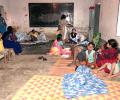
Several areas in Muslim-majority Murshidabad, including Suti, Dhulian, Jangipur and Shamsherganj, have witnessed violent protests against the Waqf (Amendment) Act that spiralled into communal violence, sparking the exodus.

The first day of the Bengali New Year, Poila Baisakh, passed without any celebrations in Dhulian, West Bengal, for the first time in over 50 years. Fear gripped the area following violence over the Waqf (Amendment) Act, leading to canceled rituals, shop closures, and a sense of uncertainty. The violence, which started on April 8, left three people dead and several injured. Protesters blocked highways, torched vehicles, and disrupted train services. While the police deployed central forces and imposed restrictions, locals still fear for their safety and demand permanent security measures. The town and its surrounding areas remain tense, with many families displaced and facing significant losses.

Two brothers have been arrested in connection with the brutal murder of a father-son duo during communal violence in Murshidabad district, West Bengal. The arrests bring the total number of people apprehended in connection with the recent violence in the district to 221. The violence erupted during protests against the Waqf (Amendment) Act.
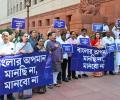
A TMC legislator in West Bengal has allegedly threatened to pour acid in the throat of anyone criticizing migrant workers from the state, sparking controversy and condemnation from opposition parties.

The West Bengal government has assured the Calcutta High Court that the law and order situation in violence-hit Murshidabad district is under control. The court was hearing a petition by the Leader of the Opposition, Suvendu Adhikari, who alleged bomb blasts during communal riots and sought an NIA investigation. The state government claims adequate steps have been taken to quell the violence, while the Centre has requested an extension of CAPF deployment in the district. The violence erupted during protests against the Waqf (Amendment) Act in Murshidabad, displacing several families. The state government has reported that some families have returned to their homes.
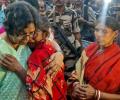
A delegation of the National Commission for Women (NCW), led by its chairman Vijaya Rahatkar, met with riot-affected women in Murshidabad district of West Bengal, assuring them of safety and demanding an NIA probe into the recent communal clashes. The women narrated their harrowing experiences and demanded permanent BSF camps in select areas of the district. The NCW team also visited relief camps in Malda district and assessed the condition of women affected by the violence.
A purported video of the incident showing the mob beating the women up mercilessly on Wednesday was shared in the social media by Amit Malviya, the head of BJP's IT cell on Saturday.

The BJP claimed that the attackers were TMC-backed goons, accusing the Mamata Banerjee government of allowing violence against opposition leaders even in times of humanitarian crisis.

West Bengal Governor C V Ananda Bose has submitted a report to the Union Ministry of Home Affairs expressing concern over the recent riots in Murshidabad district and the threat of "radicalisation" and "militancy". The governor has suggested a series of measures, including the establishment of a commission of inquiry and the deployment of central forces in border districts, and has hinted at the possibility of President's rule under Article 356 if the situation deteriorates further. He has also criticized the state government's response to the violence, alleging a lack of coordination and a failure to prevent the escalation of the situation.

'Rather than assuaging the feelings of the Hindus accommodated in schools and hospitals, she calls a meeting of imams and tries to assuage them.'
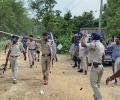
The situation remained tense but peaceful during the day, amid heavy police deployment in the area.

'Mamata needs to address the anger and resentment among various sections of the Hindu community because low-scale communal violence has always paid richer electoral dividends for the BJP.'
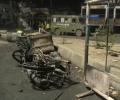
Protests against the Waqf Act turned violent in parts of West Bengal on Friday, with demonstrators setting ablaze vehicles, disrupting traffic and rail movement, and injuring several policemen. The unrest erupted in Suti, Murshidabad district, where protesters defied prohibitory orders, hurled stones at security personnel, and torched police vans and public buses during processions. Police responded with lathi charges and tear gas, while some officers were forced to seek refuge in a nearby mosque. Similar protests were held in Malda and Kolkata, prompting Governor C V Ananda Bose to direct the state government to take swift action against those responsible. The governor also contacted Union Home Minister Amit Shah and held discussions with Chief Minister Mamata Banerjee. The Waqf (Amendment) Bill, which was recently passed by both houses of Parliament, aims to improve the management of Waqf properties, safeguarding heritage sites and promoting social welfare.
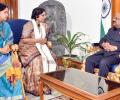
The National Commission for Women (NCW) chairperson Vijaya Rahatkar has called upon the West Bengal government to "act urgently" to address the grievances of the riot-hit people of Murshidabad district, particularly women. Rahatkar, who visited the riot-affected areas in Murshidabad and Malda over the weekend, said the commission is preparing a report which will be submitted soon to the Centre with copies to top state officials. The report will incorporate the views of women who narrated their ordeal during the violence, including demands for a Border Security Force (BSF) camp in the affected area. Rahatkar also expressed concern about the lack of action by the State Women's Commission in visiting the affected areas.

The Calcutta High Court has ordered the formation of a three-member committee to identify and rehabilitate people displaced by violence during protests over the Waqf (Amendment) Act in Murshidabad district. The court also extended the deployment of Central Armed Police Force (CAPF) in the area. The committee will consist of officials from the National Human Rights Commission (NHRC), West Bengal Human Rights Commission (WBHRC), and the State Legal Services Authority (SLSA). It will be responsible for identifying displaced persons, assessing damage to properties, collecting FIR data, facilitating FIR filing, and overseeing the well-being of displaced individuals. The state government has been instructed to provide necessary infrastructure to the committee and report on its progress by May 15. The court also directed the state to formulate a rehabilitation scheme for displaced persons, including the construction of damaged houses and shops, compensation for lost livelihoods, and protection for families of those who died in the violence.

Tension was palpable in the area, and a large police contingent was deployed to prevent any further flare-up.
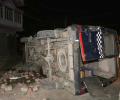
Supporters of the Indian Secular Front (ISF) clashed with police in West Bengal on Monday during protests against the Waqf (Amendment) Act, leading to several injuries and the torching of multiple police vehicles. The clash occurred after police stopped ISF supporters from attending an anti-Waqf Act rally in Kolkata. The protests escalated when the crowd attempted to break through police barricades. The situation was brought under control after a large police force was deployed. ISF leader Naushad Siddique condemned the Waqf Act and accused the BJP of trying to incite communal tension. Meanwhile, the ruling Trinamool Congress dismissed the ISF as a "party of no consequence." Communal violence related to the Waqf Act has also occurred in other parts of West Bengal.
